Skip to content
Dyerun

The question a care label never answers

Will this
bleed in
the wash?

The label inside a dark knit tells you how to wash that knit. It has never told anyone what the knit does to the white tee shirt beside it in the drum. Those are two different questions, and only one of them has ever been printed on a label.

Photograph the composition label and the garment, say what you were going to wash it with, and get a reading: wash alone, darks only, or usually safe — with what it could stain, how to handle the first wash, and how to check for yourself in thirty seconds.

Five items a month at no cost. No card to start.

Drag something into the drum

Then watch what happens to everything already in there.

Put something in

Drag an item in, or press it. Press anything inside the drum to take it out again.

What is happening in there

In the drum: white cotton tee. Nothing in there is giving colour up, so nothing changes.

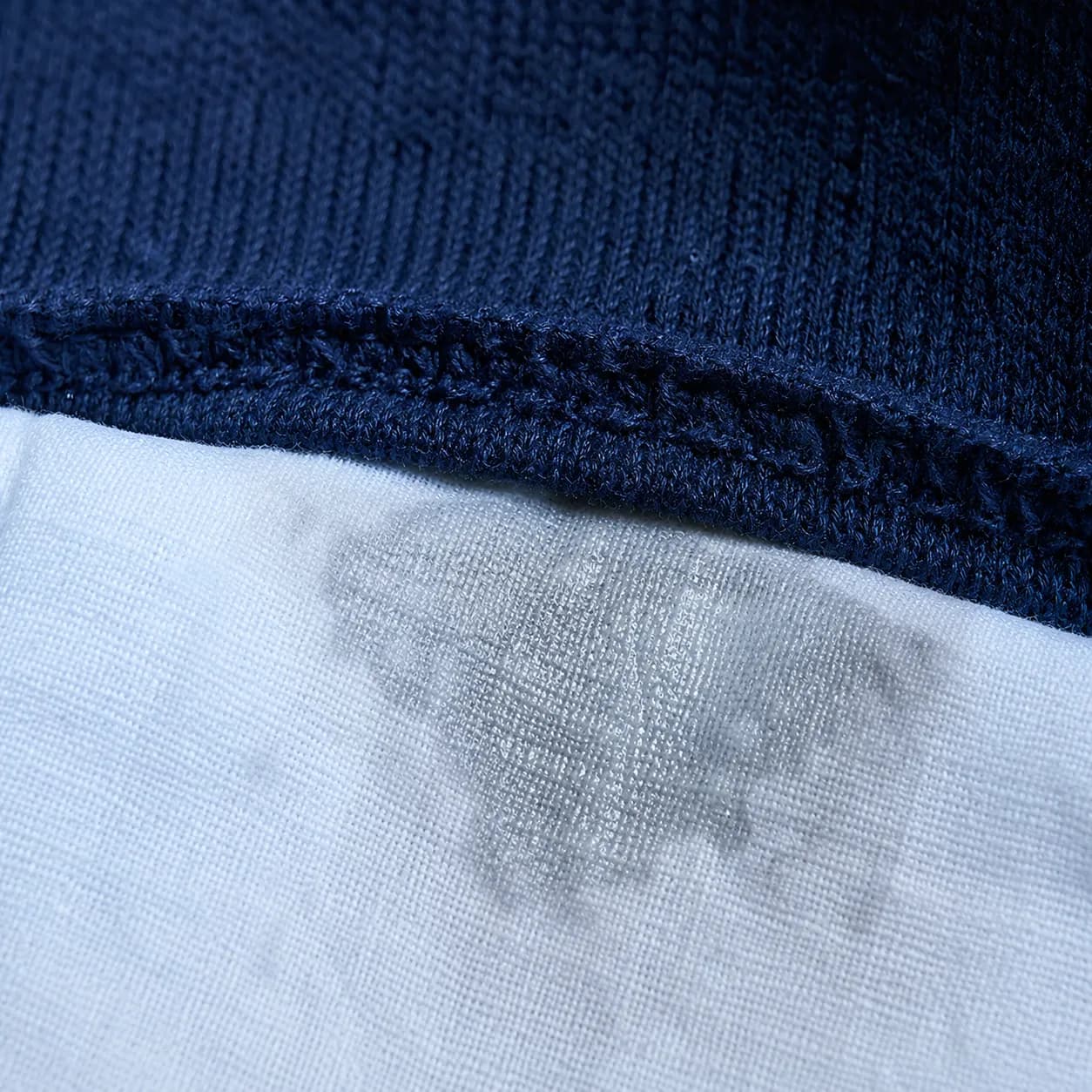
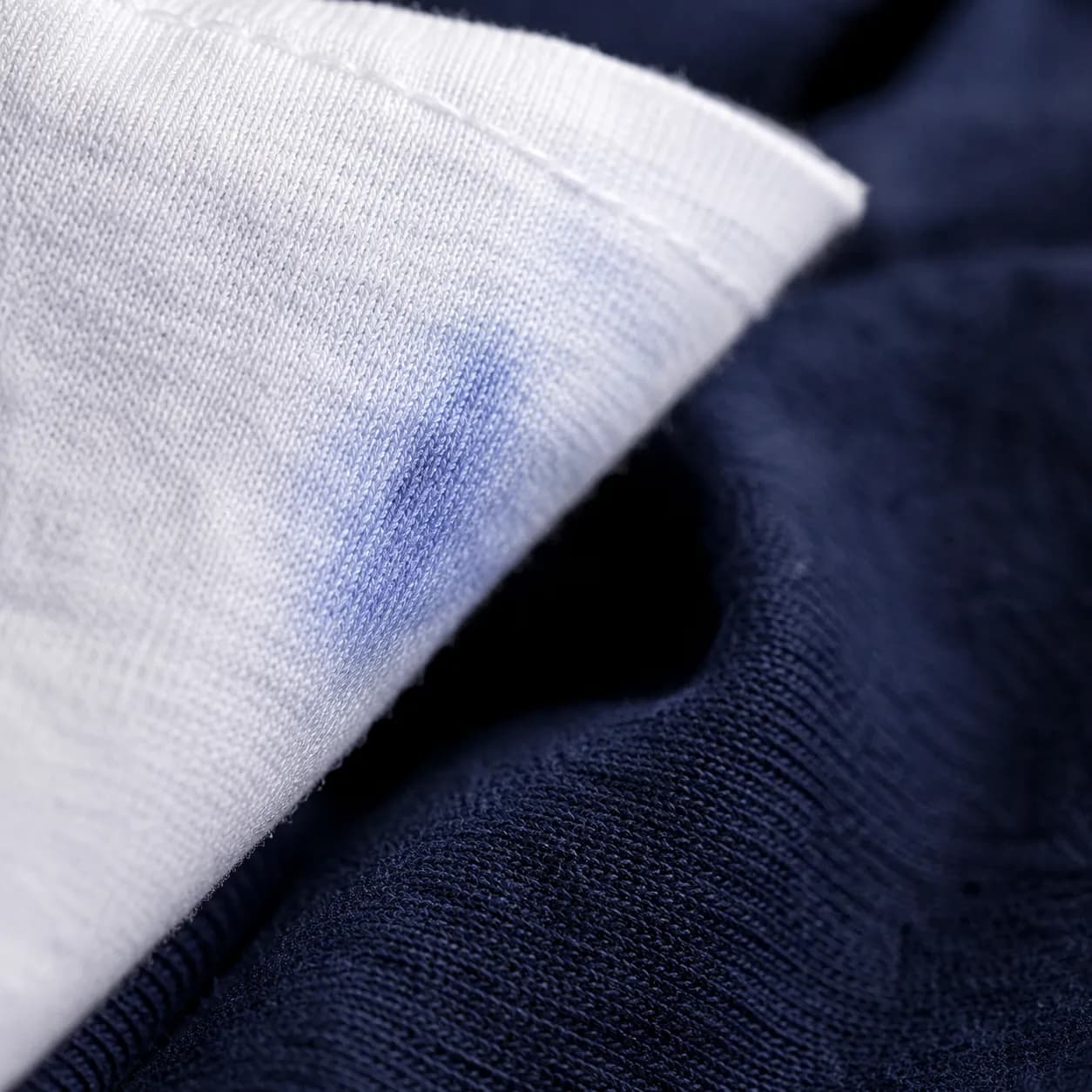
A damp white cotton cloth lifted away from a deep indigo merino knit, with a faint pale blue mark left across the cloth.

Thirty seconds of contact between a damp white cloth and an unwashed indigo knit. Nothing on the care label predicts this, because nothing on the care label is about the cloth.

Three readings, and only three

None of them is a green light

The three levels are told apart by their shape and by the words beside them, never by colour. This page is about colour; colour cannot also be carrying the verdict. They read identically on a black-and-white printout and to anyone who does not see hue the way the designer does.

The lowest level is called USUALLY SAFE, and it always arrives with the sentence that follows it. There is no level above it.

  • WASH ALONE

    On its own, this time. Nothing else in the drum.

  • WITH DARKS ONLY

    Only with things already as dark as it is, or darker.

  • USUALLY SAFE

    Nothing in the composition or the colour points to a transfer risk.

    Usually is not always. If what you are washing it with matters to you, test first.

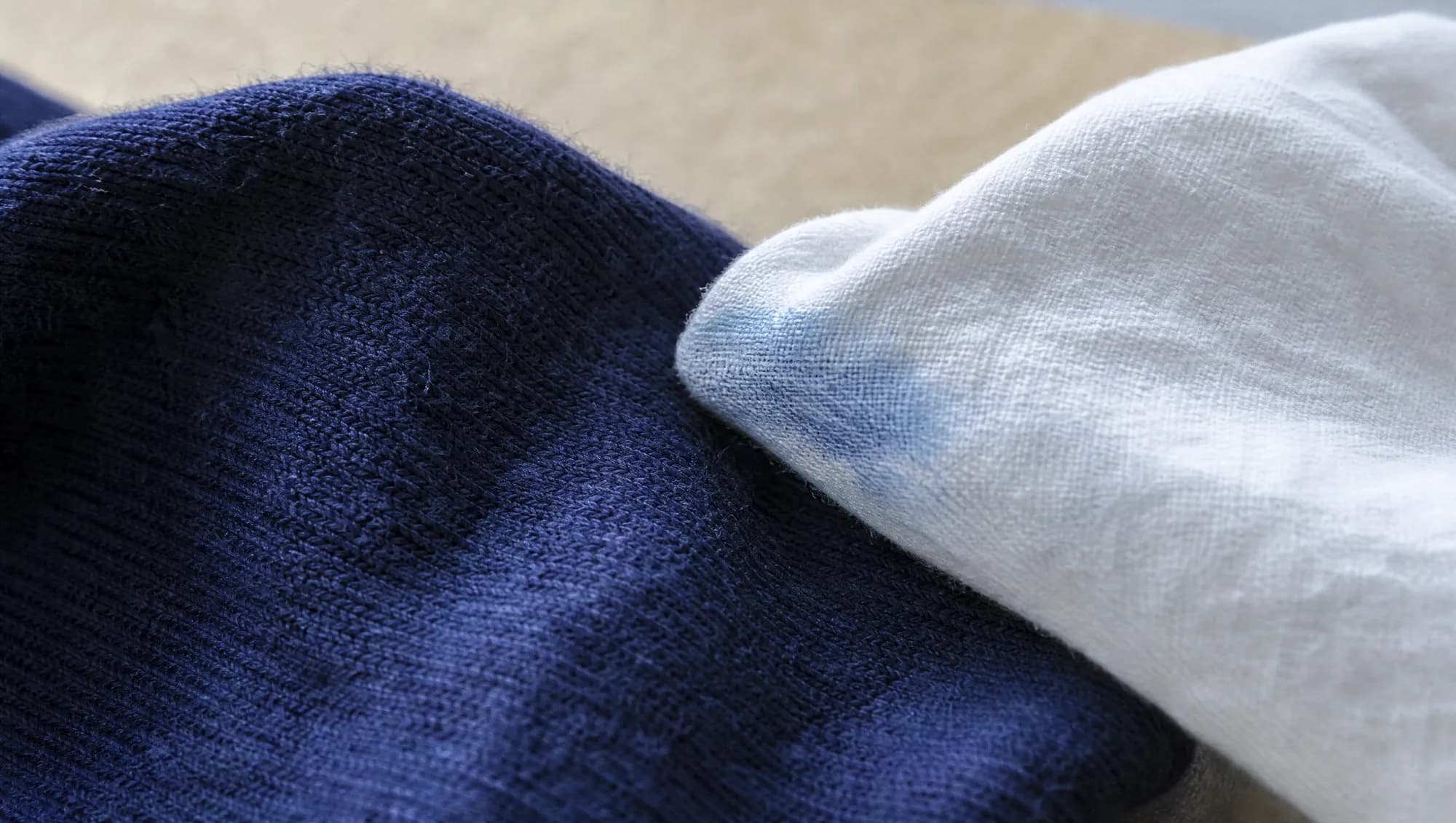
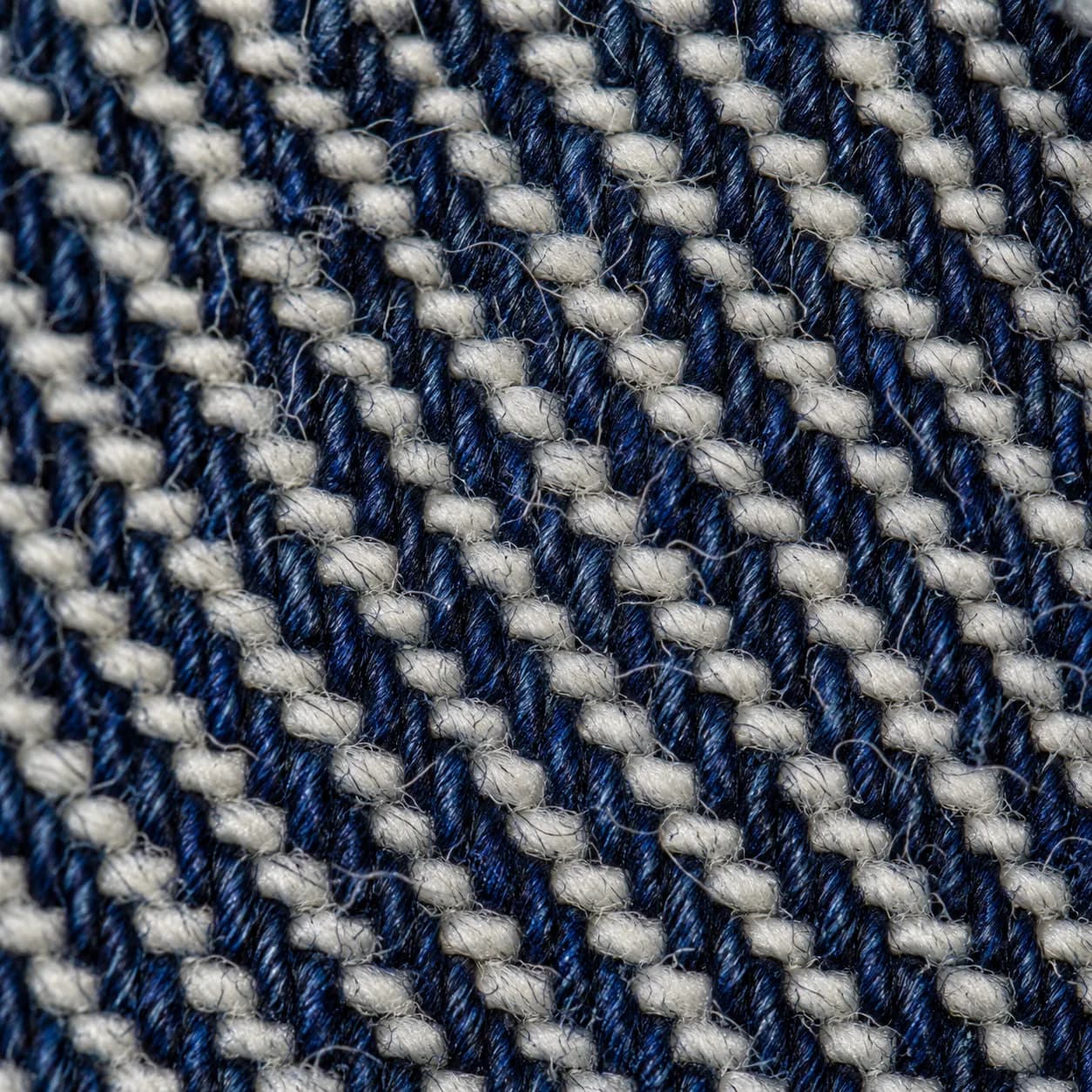
Extreme macro of indigo denim twill, blue warp crossing white weft.
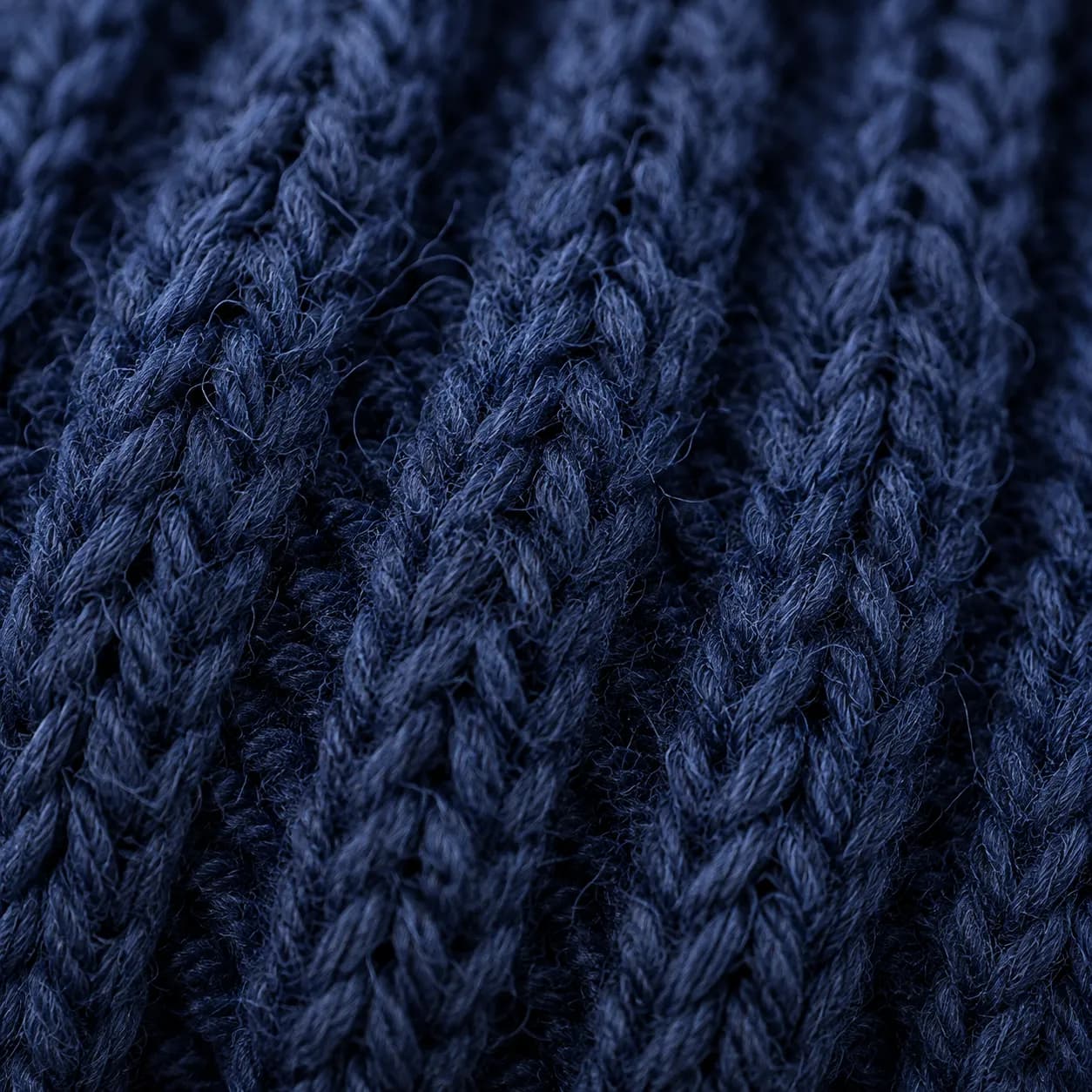
Extreme macro of deep indigo merino rib knit with a soft fibre halo.
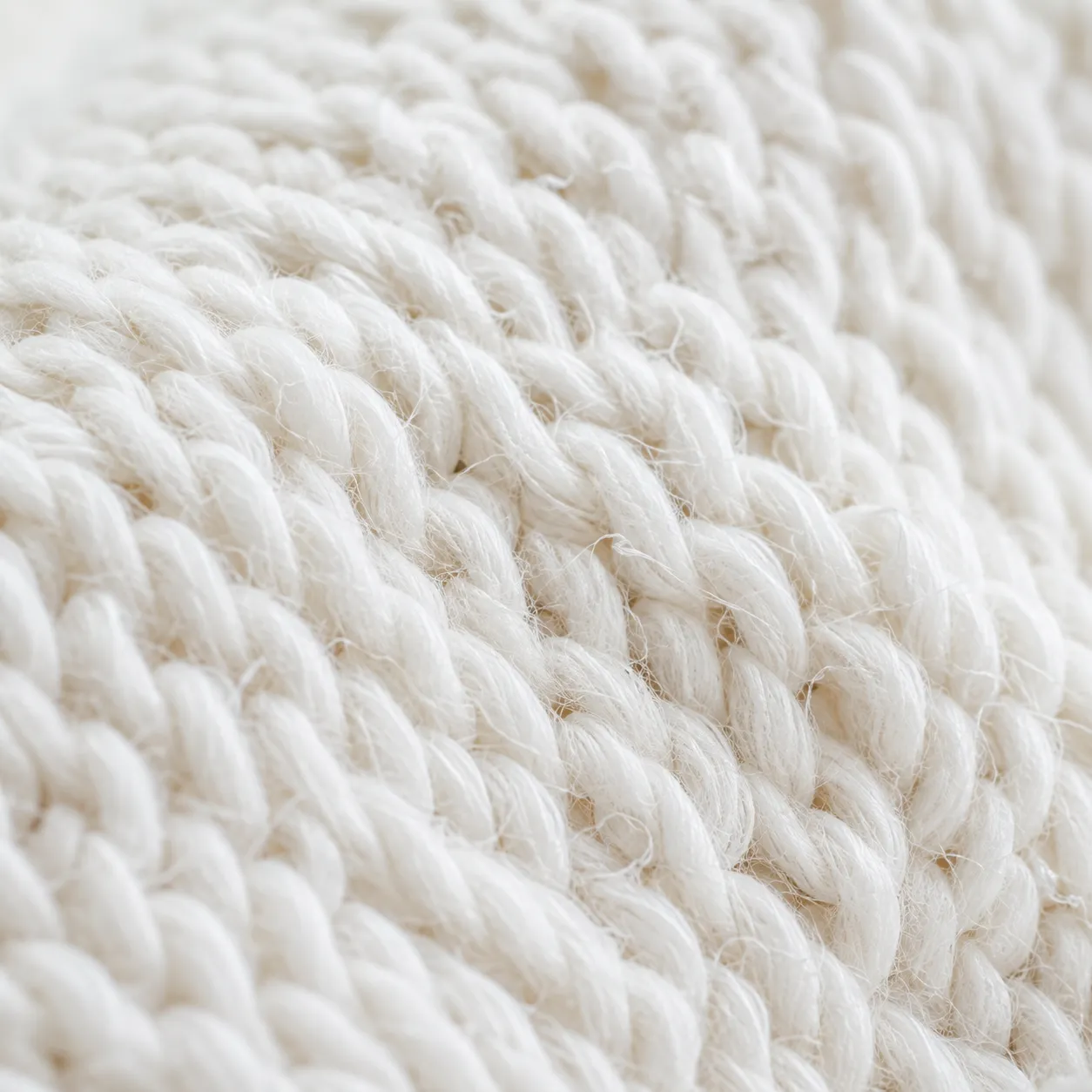
Extreme macro of undyed white cotton jersey.

Depth of colour and fibre type decide most of it. The dyeing method decides much of the rest, and is not printed anywhere.

Three steps, about a minute

Photograph · read · plan

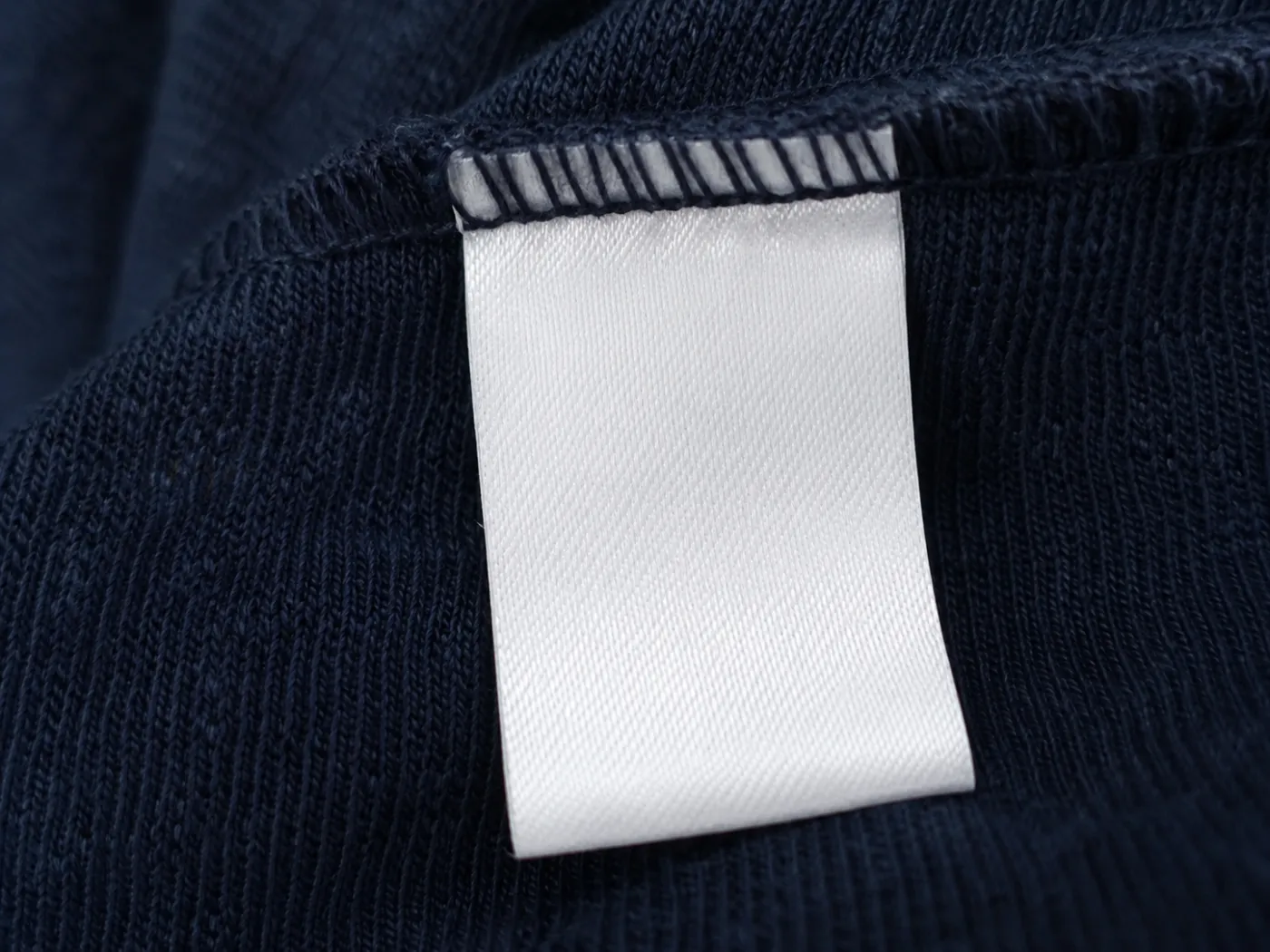
  1. A blank woven care label tape turned out from the inside seam of a dark indigo knitted garment.

    01

    Photograph the composition label

    The woven tape inside the seam, the one with the fibre percentages. Then the garment itself, so the colour depth can be read. Two photographs.

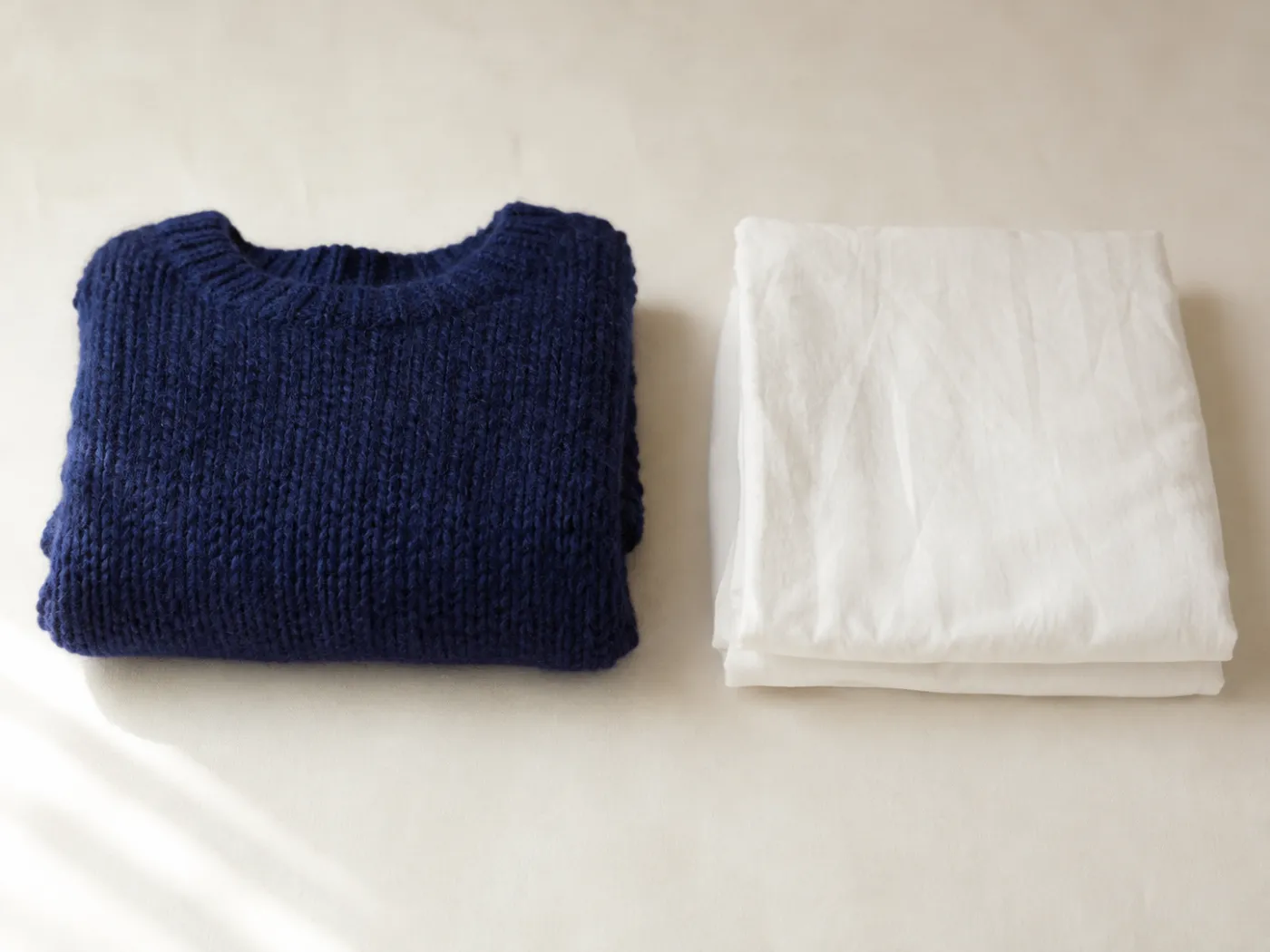
  2. A folded deep indigo merino knit beside a folded plain white cotton cloth on warm off-white paper.

    02

    Say what it was going in with

    One sentence. A load of whites, a couple of pale jumpers, your partner's oatmeal knit. The reading is about the relationship between them, so it needs both halves.

  3. A blank matte cream card held to the brushed metal front of a washing machine by a plain magnet.

    03

    Get the two cards

    A risk card — the level, why, and what it could stain. And a first-wash card: temperature, sorting, inside out, spin, drying. Printable, one page, black and white.

The most useful thing here

A white cloth beats our estimate

We read fibre and colour from two photographs. We cannot read the dyeing method, and that is one of the things that decides the answer. So the honest thing to do is hand you the better method and get out of the way.

It takes thirty seconds, needs nothing you do not already own, and damages nothing. It is free here and it stays free on every plan.

What it costs
Nothing, and no account. A white cotton rag and thirty seconds.
Why it beats the estimate
It reacts to the dye that is actually on the cloth, including the dyeing method we cannot read.
What it will not tell you
How much comes off across a whole garment in twenty minutes of agitation. It only tells you whether anything moves at all — which is the part worth knowing.

The test, in full

  1. 01Take a plain white cotton cloth — an old tee shirt, a handkerchief, a cotton pad. It must be white and it must be cotton.
  2. 02Dampen it with cold water and wring it out so it is wet but not dripping.
  3. 03Find a hidden part of the garment: an inside seam allowance, the inside of a hem, under a collar.
  4. 04Press the damp cloth firmly against that spot and hold it there for about thirty seconds. Press hard — the pressure matters more than the time.
  5. 05Lift the cloth away and look at it in daylight, near a window, not under a bulb.

What you are looking for

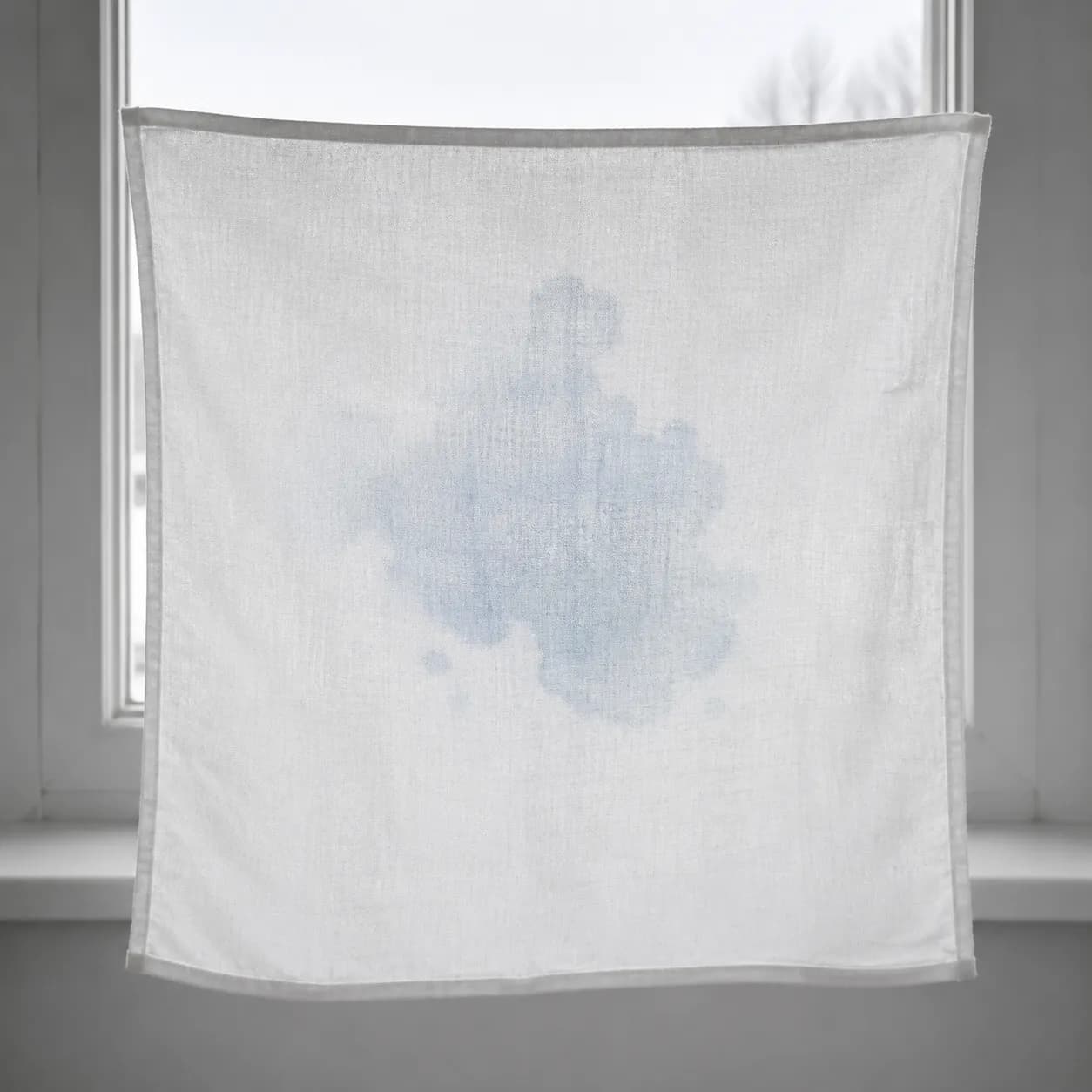
Any colour at all on the white cloth means dye is moving. A faint tint is enough to change what you do — it will be far stronger across a whole garment in a drum of water than it is under your thumb. If the cloth stays white, you have learned something the estimate on this page cannot tell you.

INSIDE SEAMWHITE COTTON CLOTH

Nothing yet. The cloth has only just made contact.

An illustration of how transfer builds over thirty seconds, not a reading of any particular garment. Do the test on your own item — that result is worth more than anything estimated from a photograph.

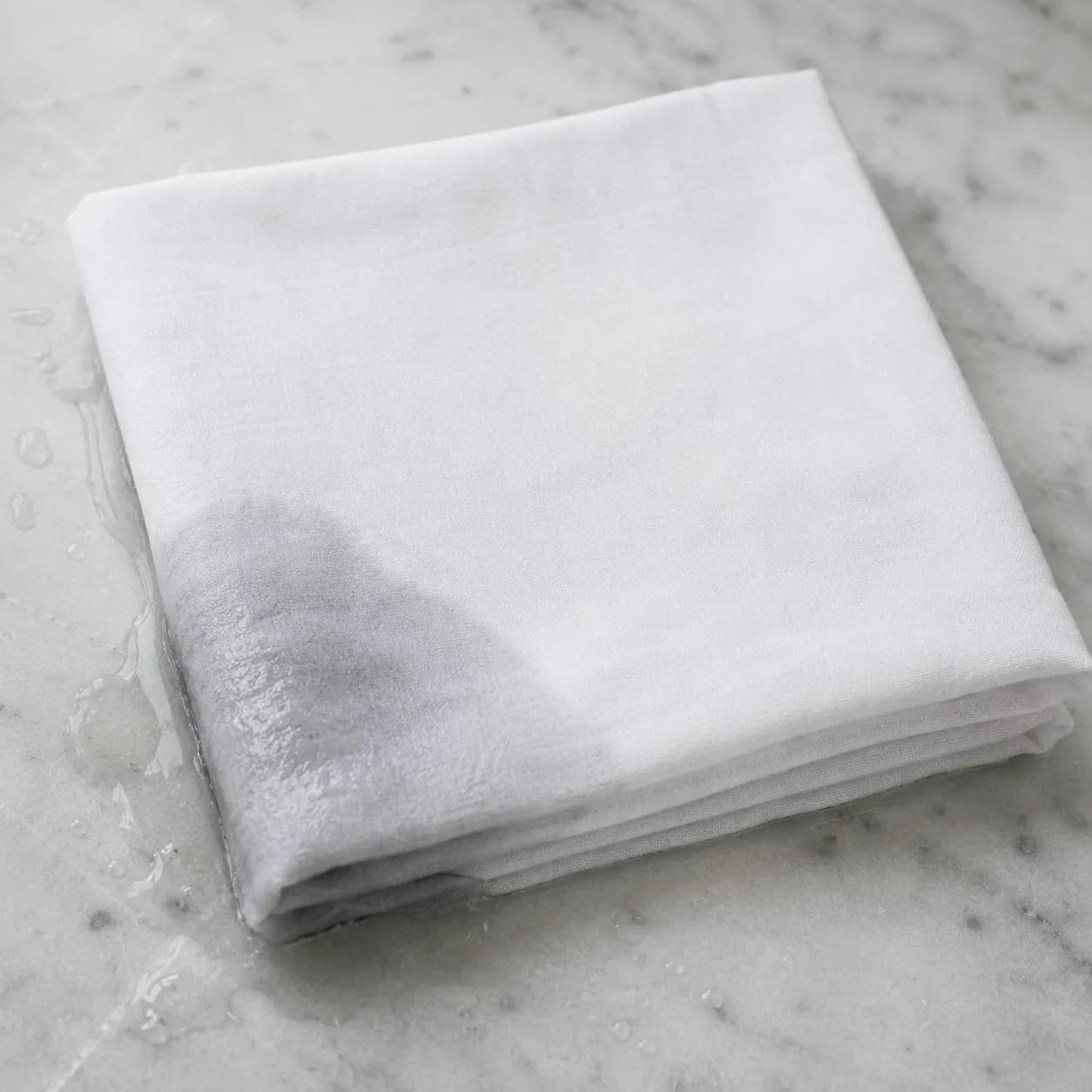
A folded square of plain white cotton cloth with one corner damp.
01
A damp white cotton cloth pressed flat against the inside seam of a deep indigo knit.
02
A white cotton cloth being lifted away from a deep indigo knit, showing a faint blue mark.
03
A white cloth with a faint pale blue mark held flat against a bright window.
04

Before you pay for anything

What this reading cannot know

This is on the page before the prices rather than after them, because it is the part that decides whether the rest is worth anything to you.

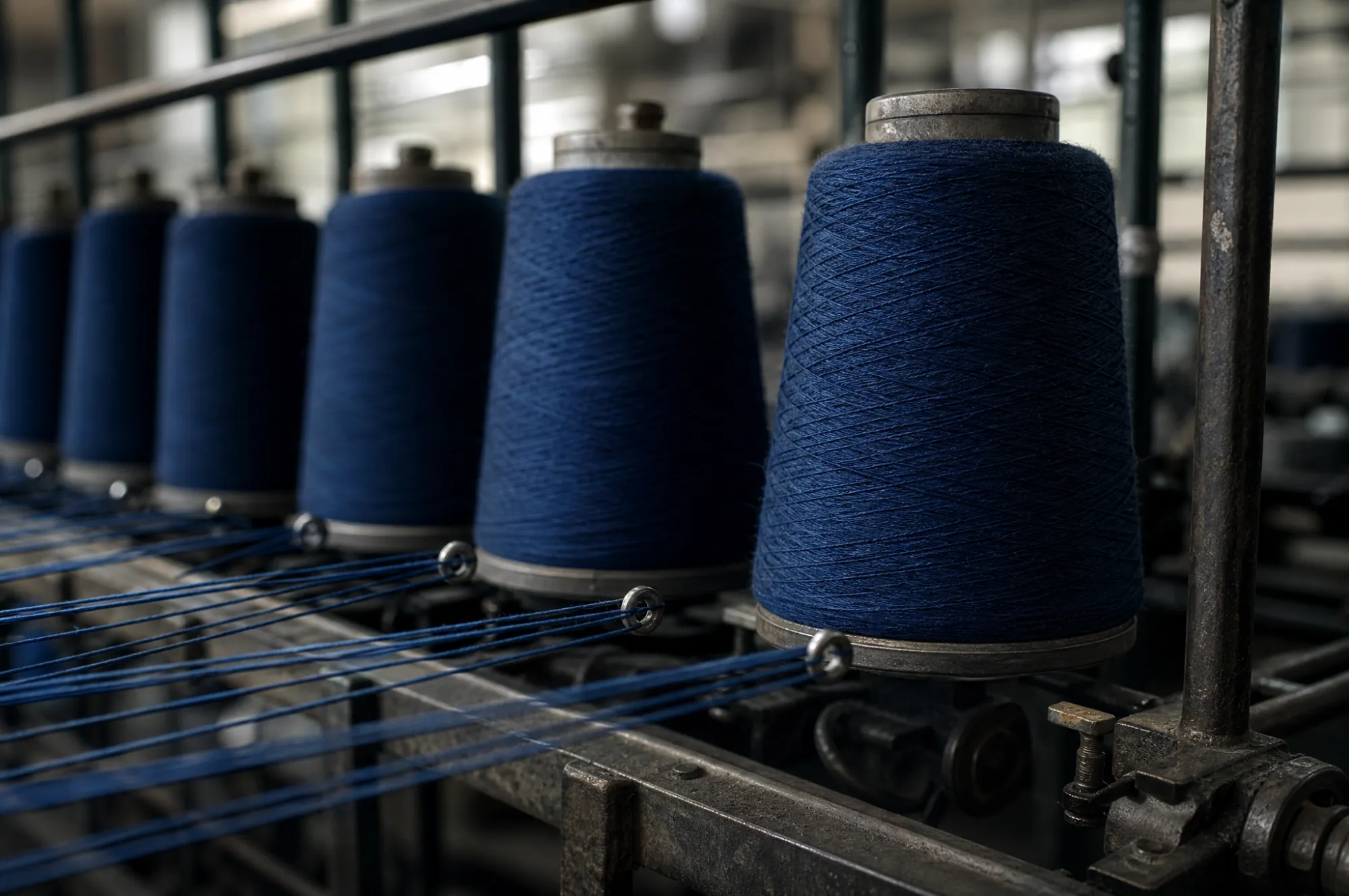
Cones of indigo dyed yarn on an industrial knitting machine creel.
  1. 01

    The dyeing method — reactive, direct, sulphur or acid — is not printed on a composition label, so we cannot read it. It is one of the factors that decides whether an item bleeds.

  2. 02

    Whether the item was given a fixing treatment after dyeing. A fixed and an unfixed garment can carry an identical composition label.

  3. 03

    Your water. Hardness and mineral content change how much dye comes off and where it ends up.

  4. 04

    Your detergent and its dose, and whether the machine is overloaded — agitation between garments loosens surface dye.

  5. 05

    How the item was stored, and whether it has been worn against anything pale already.

  6. 06

    Anything printed, coated, embroidered or bonded onto the garment, which behaves differently from the base cloth.

This service never states that an item will not transfer colour, and never tells you it is fine to mix. The lowest reading it can give is USUALLY SAFE. Usually is not always.

What you actually get

Two cards, one page

Below is a real reading from the table this service uses, for a 100% cotton indigo knitted polo that has never been washed, going in with whites.

Check it yourself — this is better

  1. 01Take a plain white cotton cloth — an old tee shirt, a handkerchief, a cotton pad. It must be white and it must be cotton.
  2. 02Dampen it with cold water and wring it out so it is wet but not dripping.
  3. 03Find a hidden part of the garment: an inside seam allowance, the inside of a hem, under a collar.
  4. 04Press the damp cloth firmly against that spot and hold it there for about thirty seconds. Press hard — the pressure matters more than the time.
  5. 05Lift the cloth away and look at it in daylight, near a window, not under a bulb.

Any colour at all on the white cloth means dye is moving. A faint tint is enough to change what you do — it will be far stronger across a whole garment in a drum of water than it is under your thumb. If the cloth stays white, you have learned something the estimate on this page cannot tell you.

What this reading cannot know

  • The dyeing method — reactive, direct, sulphur or acid — is not printed on a composition label, so we cannot read it. It is one of the factors that decides whether an item bleeds.
  • Whether the item was given a fixing treatment after dyeing. A fixed and an unfixed garment can carry an identical composition label.
  • Your water. Hardness and mineral content change how much dye comes off and where it ends up.
  • Your detergent and its dose, and whether the machine is overloaded — agitation between garments loosens surface dye.
  • How the item was stored, and whether it has been worn against anything pale already.
  • Anything printed, coated, embroidered or bonded onto the garment, which behaves differently from the base cloth.
A blank matte cream card held to the side of a white washing machine by a plain magnet.
Two blank cream cards on a pale oak counter beside a folded indigo polo and a white tee.
A freshly printed blank sheet of office paper on a matte dark grey desk.
A neat stack of blank cream cards fanned slightly on warm off-white paper.
Twelve blank cream cards arranged in a precise grid on warm off-white paper.
A blank cream card leaning against the woven rim of a laundry basket of dark garments.
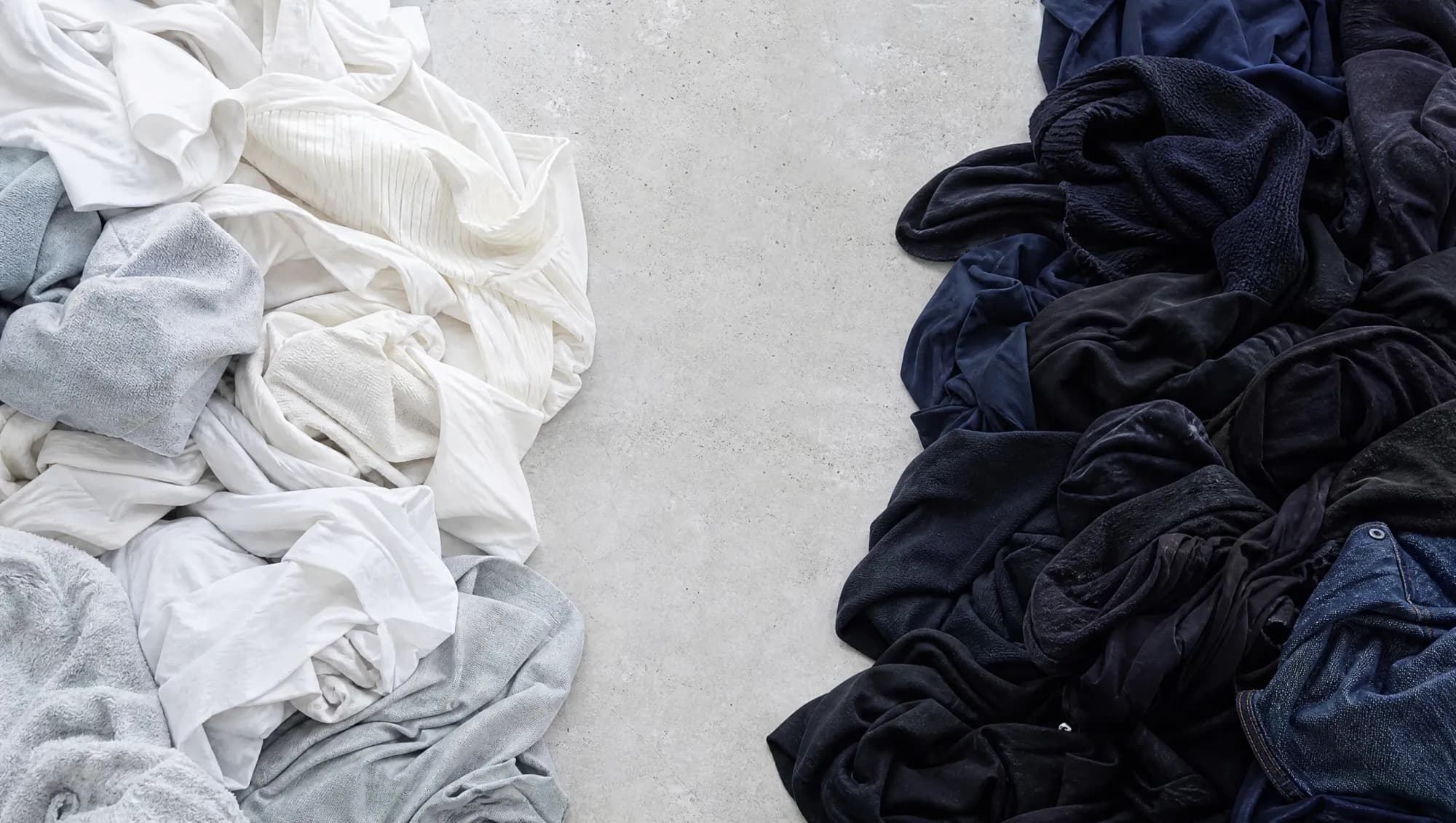
A laundry pile sorted into whites and pale greys on one side and deep indigo and black on the other.

Plans

Where the payment sits, and why

The free plan gives you the reading, the reasons, what it could stain, the self-test in full and every limit in full. What it does not give you is the first-wash card — the part you can actually follow at the machine.

Knowing an item is high risk solves half the problem. The decision you still have is what to do about it this evening: how cold, on its own or grouped, inside out or not, and how to check afterwards.

Full pricing and what is in each plan

Free

Free

Enough to read a few items and see whether the judgement is worth anything to you.

  • Five items a month
  • The three-level reading, with the reasons behind it
  • What it could stain, named to a colour and a material
  • The at-home test, in full

Rinse

USD $6 / month

or USD $58 a year

For a wardrobe that keeps acquiring dark things. The first-wash card is the part you can actually follow.

  • Everything in Free, without the five-item limit
  • The first-wash card: temperature, sorting, inside out, spin, drying
  • No watermark on either card
  • Print-ready version, black and white, one page

Load

USD $19 / month

or USD $182 a year

For the question you actually have, which is not about one garment. It is whether today's drum can go in together.

  • Everything in Rinse
  • Whole-load check: put several items in and see which of them cannot share a drum
  • Side-by-side comparison of items you are unsure about
  • Priority queue at busy times

All prices in USD and include VAT at 20%. Subscriptions renew automatically until cancelled; cancelling takes the same two clicks as subscribing. Allowance does not carry over between periods, and there is no way to buy extra separately.

Questions

The awkward ones first

If something here is not answered, write to us. A person reads that inbox.

Can I just get a straight yes or no?

No. We cannot, and we will not say otherwise anywhere on this site.

The reading is made from two things a photograph can show: what the fibres are, and how deep the colour is. Those two things drive most of the outcome, but not all of it. The dyeing method — reactive, direct, sulphur or acid — is one of the decisive factors, and it is not printed on a composition label. We cannot read it, and neither can you. Whether the item was given a fixing treatment afterwards is equally invisible, and so are your water and your detergent.

So the lowest reading this service can give is USUALLY SAFE, and usually is not always. If the answer matters to you — if what is going in with it is something you would be upset to lose — press a damp white cotton cloth firmly against an inside seam for thirty seconds and look at the cloth in daylight. That test tells you something our estimate cannot.

The care label says machine wash. You say wash alone. Which do I follow?

Both. They are not in conflict, because they answer different questions.

The care label states the harshest treatment the fabric itself will survive: this temperature, this cycle, this drying method, without the garment shrinking, felting or losing its shape. That is a statement about the item’s own durability.

Our reading is about what leaves the item and lands on everything else in the drum. Washing something on its own is still a machine wash — it is the same temperature and the same cycle the label specifies, with nothing else in there to take the colour. Follow the label for how, and follow the reading for what goes in alongside.

What happens to the photographs I upload?

They are used to produce your reading and nothing else. Photographs are not used to train any model. We do not sell them, share them for advertising, or use them to build a dataset.

On the free plan, photographs are deleted within 24 hours of the reading being produced. On a paid plan they are kept with the garment record so a second wash can start from what you already know, and you can delete any record — and its photographs — from your account at any time, which removes them from live systems immediately and from backups within 30 days. Deleting your account deletes everything.

The full detail, including who processes what and how international transfers are handled, is in the privacy policy.

How accurate is it, and what happens if it is wrong?

It is an estimate from fibre content and colour depth. It is not a colourfastness test — a laboratory test wets, rubs and measures the actual fabric under controlled conditions, and we are looking at two photographs.

The judgement is deliberately cautious. Where the evidence is ambiguous the reading errs towards washing separately, because being told to wash something alone unnecessarily costs you one cycle, and being told something was fine when it was not costs you a drum of clothes that cannot be put back.

We cannot be responsible for what comes out of your machine, and the reading must not be used as evidence in a claim, return or complaint against a retailer or manufacturer. This limitation is about the accuracy of the estimate; it does not affect your statutory rights in relation to this service itself. See the notice on how the estimate works.

Can I cancel, and can I get a refund?

Yes to both, and cancelling takes the same number of clicks as subscribing — one link in your billing page, no phone call, no form to request it.

You have 14 days to cancel a new subscription. If you asked us to start the service straight away and it has been fully performed within those 14 days, the right to cancel ends at that point — you are told this at the checkout, in two separate statements you have to agree to individually, and both are repeated in your confirmation email. If it has been partly performed, you can still cancel and we refund the part not yet supplied.

Ahead of a requirement that applies from spring 2027, we also give you a fresh 14-day cancellation window after every renewal, and we email a reminder before each renewal in a message that contains nothing but that reminder. The full process, and the statutory cancellation form, are on the cancellation page.

What is the allowance, and can I buy more of it?

Allowance is a measure of how much you have used the service in the current period. Asking a question about an item costs 1. Reading the composition label and the colour costs 2. Producing the risk card and the first-wash card costs 5.

You cannot buy more separately. There are no packs, no top-ups and no balance you hold with us — allowance is not money, it is not stored value, it cannot be exchanged for cash and it cannot be transferred. Unused allowance does not carry over into the next period. If you run out, the only route is a higher plan, and we would rather say that plainly than sell you something that looks like currency.

Do you tell me which product to use?

No. This service recommends no fixative, no colour catcher, no detergent, no wash bag and no other product, and it has no commercial relationship with any brand or retailer of such things.

What you get instead are general handling steps that cost nothing: cold water, inside out, a short cycle, low spin, out of the machine promptly, dried away from anything pale. We also do not repeat the folk remedies that circulate about this subject — soaking in salt or vinegar and so on. They are not supported by evidence and we are not going to pass them on.

We also do not evaluate brands or present bleeding as any brand’s fault. Deep colour on a natural fibre behaves the way it behaves.

Is there an age restriction?

This service is for adults. You must be 18 or over to create an account or to subscribe. We do not knowingly collect information from children, and if we learn that an account belongs to someone under 18 we close it and delete the data.

What is not covered by this service?

We do not carry out colourfastness testing, and this is not a substitute for one. We do not sell clothing, detergents or any other product. We take no part in claims, returns or disputes with retailers or manufacturers, and our output must not be used as evidence in one.

The service must not be relied on for medical, legal, financial, safety, employment, credit, housing or judicial decisions. It is a reading about laundry.

It is the load you cannot undo

A wash that goes wrong is not a stain you treat afterwards. The colour is in the fibre of everything that was in there with it. Two photographs and a minute is a cheap way to find out first — and a damp white cloth is cheaper still.

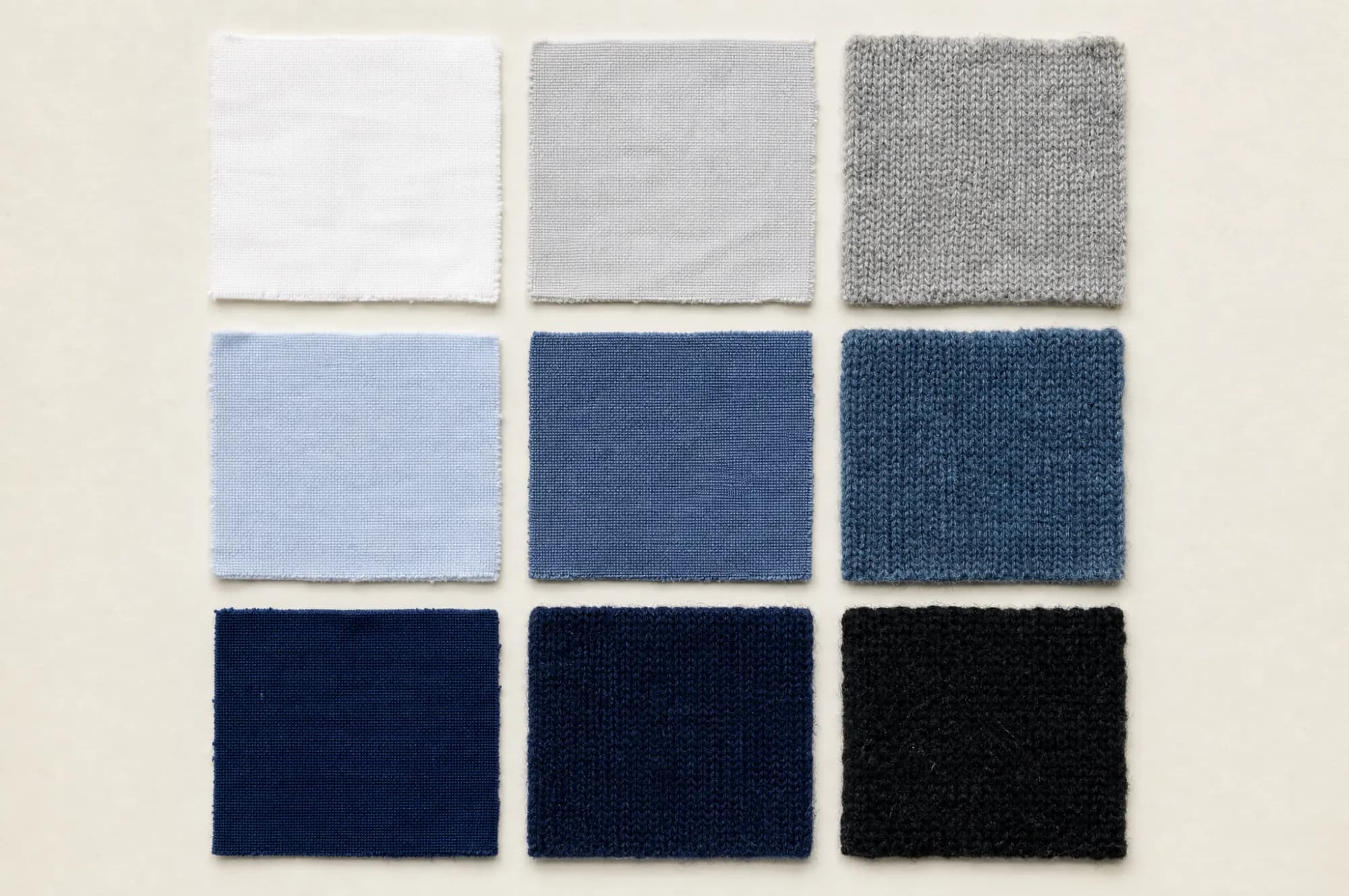
Nine fabric swatches in a three by three grid, graduating from white through pale grey and mid blue to deep indigo.